
 Save
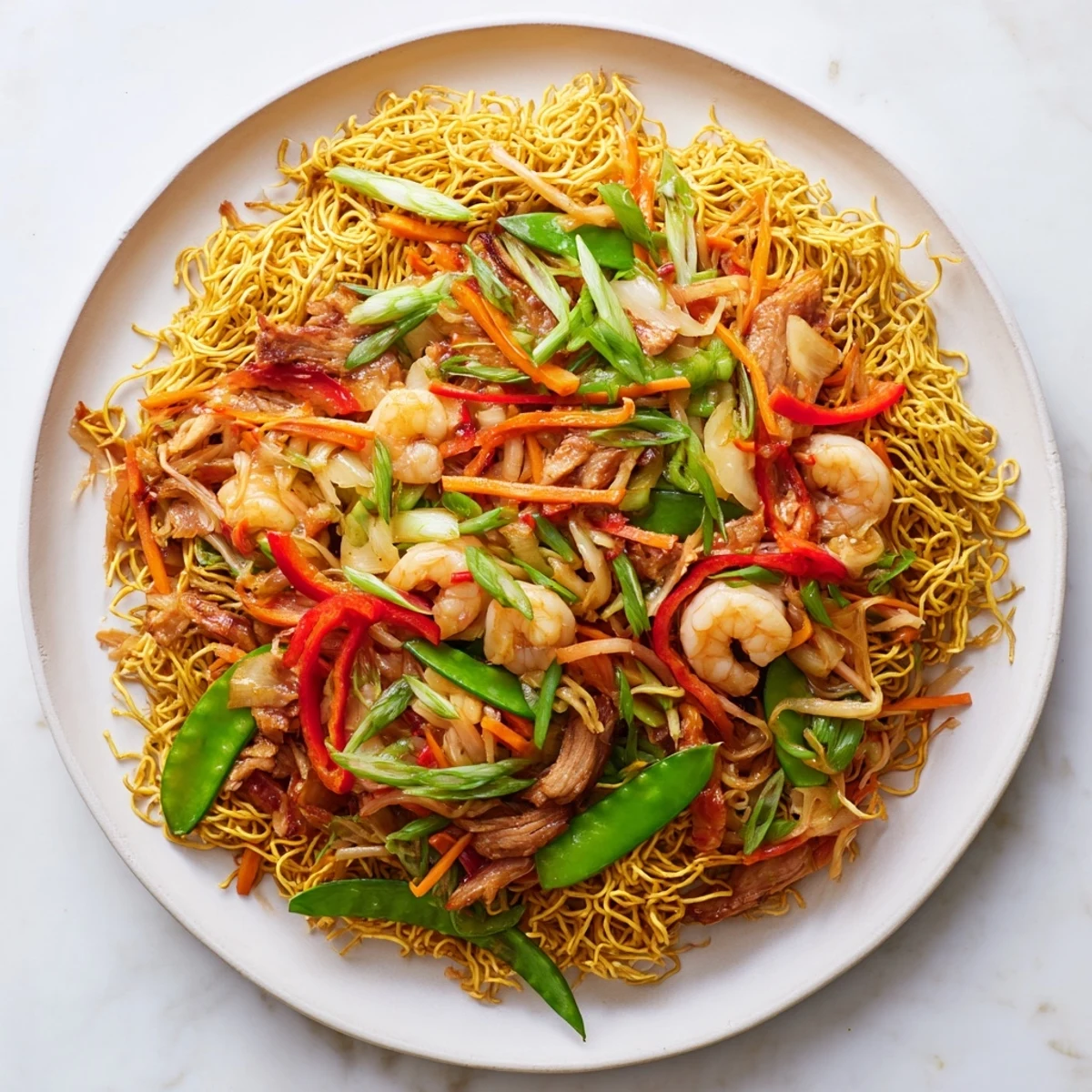
Save Experience restaurant-quality Cantonese chow mein with perfectly crispy noodles and a flavorful topping. This beloved dish combines fresh egg noodles pan-fried until golden, then crowned with tender protein and crisp vegetables in a rich, savory sauce. The combination of textures—crunchy noodles against tender toppings—makes this a satisfying main course.
Prepare the components separately: first create a crispy noodle base, then quickly stir-fry marinated chicken, shrimp, and char siu with colorful vegetables. Finish with a glossy sauce that brings everything together. The result is an impressive dish that delivers authentic Chinese restaurant flavors at home.
The first time I tried ordering Cantonese Chow Mein at a bustling dim sum house in Vancouver, I watched in awe as the server set down a steaming platter where the noodles had formed this incredible golden crust that shattered beautifully when you broke through it with your chopsticks. I spent years trying to recreate that perfect contrast between the crispy bottom noodles and the tender, saucy topping in my home kitchen. After many soggy attempts and one particularly memorable kitchen fire incident, I finally learned the secret lies in patience and letting those noodles develop their crunch undisturbed. Now this dish has become my go-to for busy weeknight dinners when I want something that feels special enough for guests but comes together quickly.
Last winter my neighbor came over complaining about how her chow mein never turned out like what she ate at restaurants, so we spent an afternoon making this together. She stood over my stove watching the noodles crisp up, insisting that they were burning, but when we finally flipped that noodle cake over and saw the gorgeous golden brown crust, her eyes lit up like a kid. Now she calls me every time she makes this to report back on how perfectly her noodles turned out, and it has become the dish she requests whenever I have people over.
Ingredients
- Fresh egg noodles (400 g): These are essential for achieving that signature chewy texture that dried noodles just cannot replicate
- Vegetable oil (2 tbsp): Split between crisping the noodles and stir frying the topping, this neutral oil lets other flavors shine
- Chicken breast (150 g): Thinly sliced against the grain for maximum tenderness, this adds hearty protein to the dish
- Shrimp (100 g): Peeled and deveined, these cook quickly and add a sweet seafood flavor that balances the savory sauce
- Char siu (100 g): This Chinese BBQ pork brings a sweet smokiness that makes the dish taste authentically restaurant quality
- Carrot (1 small): Julienned into thin matchsticks for texture and natural sweetness
- Red bell pepper (1/2): Thinly sliced to add vibrant color and a slight crunch that contrasts beautifully with soft noodles
- Bean sprouts (100 g): These add essential freshness and a satisfying crunch in every bite
- Spring onions (2): Both white and green parts add mild onion flavor and a pop of color
- Snow peas (100 g): Trimmed and briefly cooked, these bring a sweet pea flavor and crisp texture
- Light soy sauce (2 tbsp): This provides the essential savory base and rich umami flavor
- Oyster sauce (1 tbsp): The secret ingredient that adds depth and a subtle sweetness
- Shaoxing wine (1 tbsp): Chinese rice wine that adds complexity and helps cut through rich flavors
- Sugar (1 tsp): Just enough to balance the salty soy sauce and round out all the flavors
- Sesame oil (1 tsp): A tiny amount goes a long way in adding that signature nutty aroma
- Chicken stock (1/2 cup): Creates the silky sauce that ties everything together
- Cornstarch (1 tsp): Mixed with water to thicken the sauce so it clings perfectly to every ingredient
- Soy sauce (1 tsp): For the simple marinade that seasons the proteins
- White pepper (pinch): Adds a gentle warmth that is traditional in Chinese cooking
Instructions
- Marinate the proteins:
- Toss your chicken and shrimp in the simple soy sauce, cornstarch, and white pepper mixture, then let them sit for about 10 minutes to become tender and flavorful.
- Prepare the noodles:
- Boil your fresh egg noodles for just 1 to 2 minutes until they loosen up, then drain them extremely well so they will crisp up properly later.
- Create the crispy noodle cake:
- Heat half the oil in your wok or skillet, spread the drained noodles evenly, and let them cook undisturbed for 3 to 4 minutes until golden and crisp on the bottom before flipping and repeating.
- Stir fry the proteins:
- Add the remaining oil to your hot wok and cook the marinated chicken for 1 to 2 minutes, then add the shrimp until they turn pink before tossing in the char siu.
- Add the vegetables:
- Throw in your carrot, bell pepper, and snow peas, stir frying for 2 to 3 minutes until they are bright and crisp tender.
- Add delicate vegetables:
- Toss in bean sprouts and spring onions for just 1 minute so they stay crunchy and fresh.
- Create the sauce:
- Mix all your sauce ingredients except the cornstarch slurry, pour them into the wok, and let everything bubble up together.
- Thicken and serve:
- Stir in your cornstarch mixture until the sauce thickens nicely, then pour everything over that beautiful crispy noodle cake you made earlier.
 Save
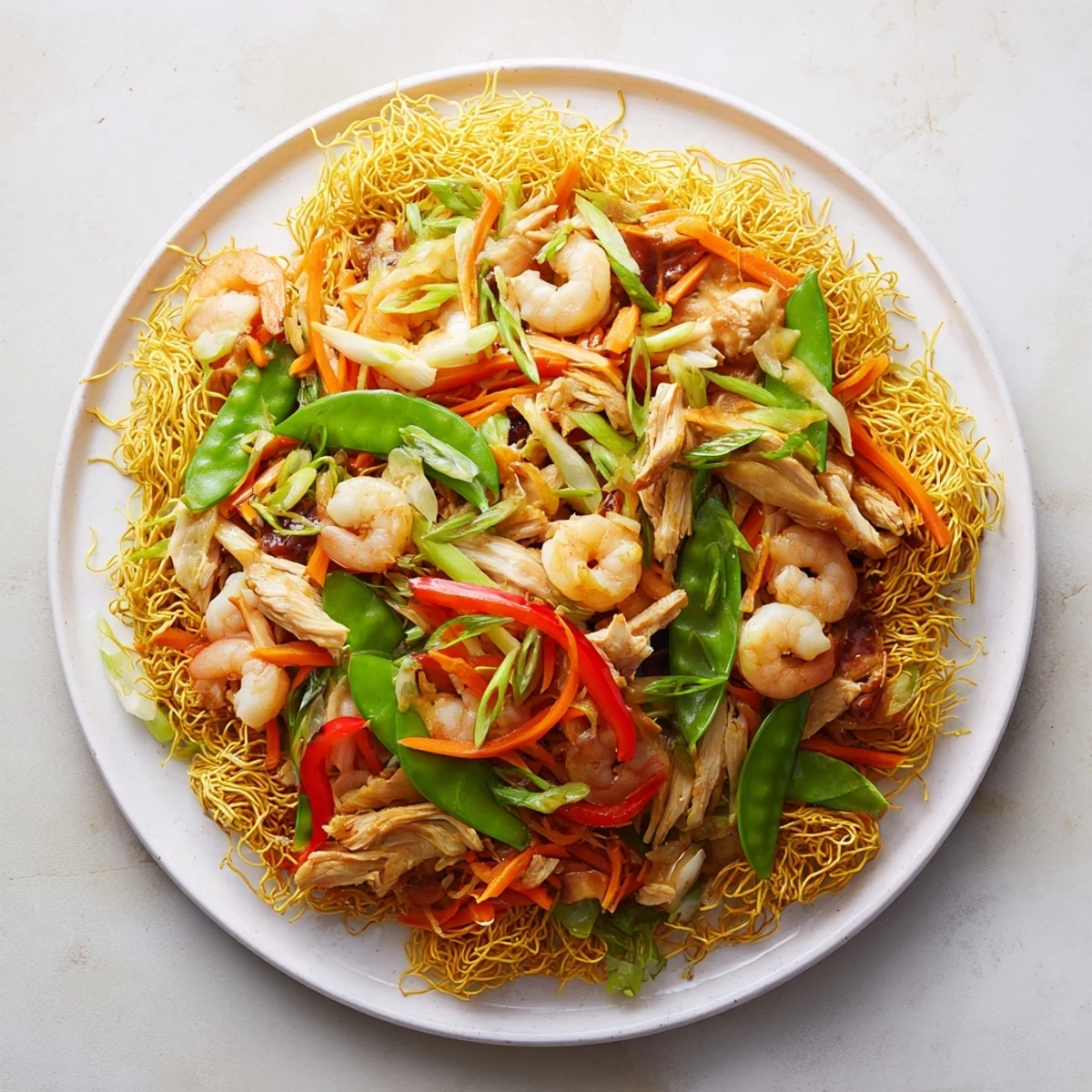
Save My daughter who normally protests whenever vegetables appear in her dinner actually asked for seconds when I made this last week, saying the crunchy noodles made everything taste better. There is something deeply satisfying about hearing that crisp sound when you dig into this dish, and watching friends and family instinctively lean in when you place the platter on the table.
Getting The Perfect Noodle Crunch
The biggest mistake I see home cooks make is trying to flip their noodle cake too early. You will know it is ready when you hear it sizzling and can see golden brown edges creeping up the sides of the pan. I learned the hard way that patience here makes all the difference between a memorable dish and a mediocre one.
Building Your Flavor Profile
If you cannot find char siu at your local Asian market, you can substitute it with roasted pork or even thick cut bacon for a different but equally delicious smoky element. The key is having one protein that brings a little sweetness to balance the salty soy sauce.
Customizing Your Chow Mein
This recipe adapts beautifully to whatever vegetables are in season or lingering in your crisper drawer. I have made successful versions with bok choy, mushrooms, and even julienned zucchini when that was what I had on hand.
- Cook your vegetables in batches if your wok gets overcrowded so they stir fry instead of steam
- Double the sauce recipe if you love your chow mein extra saucy and soaked
- Prep all your ingredients before you start cooking because everything happens very quickly once the heat is on
 Save
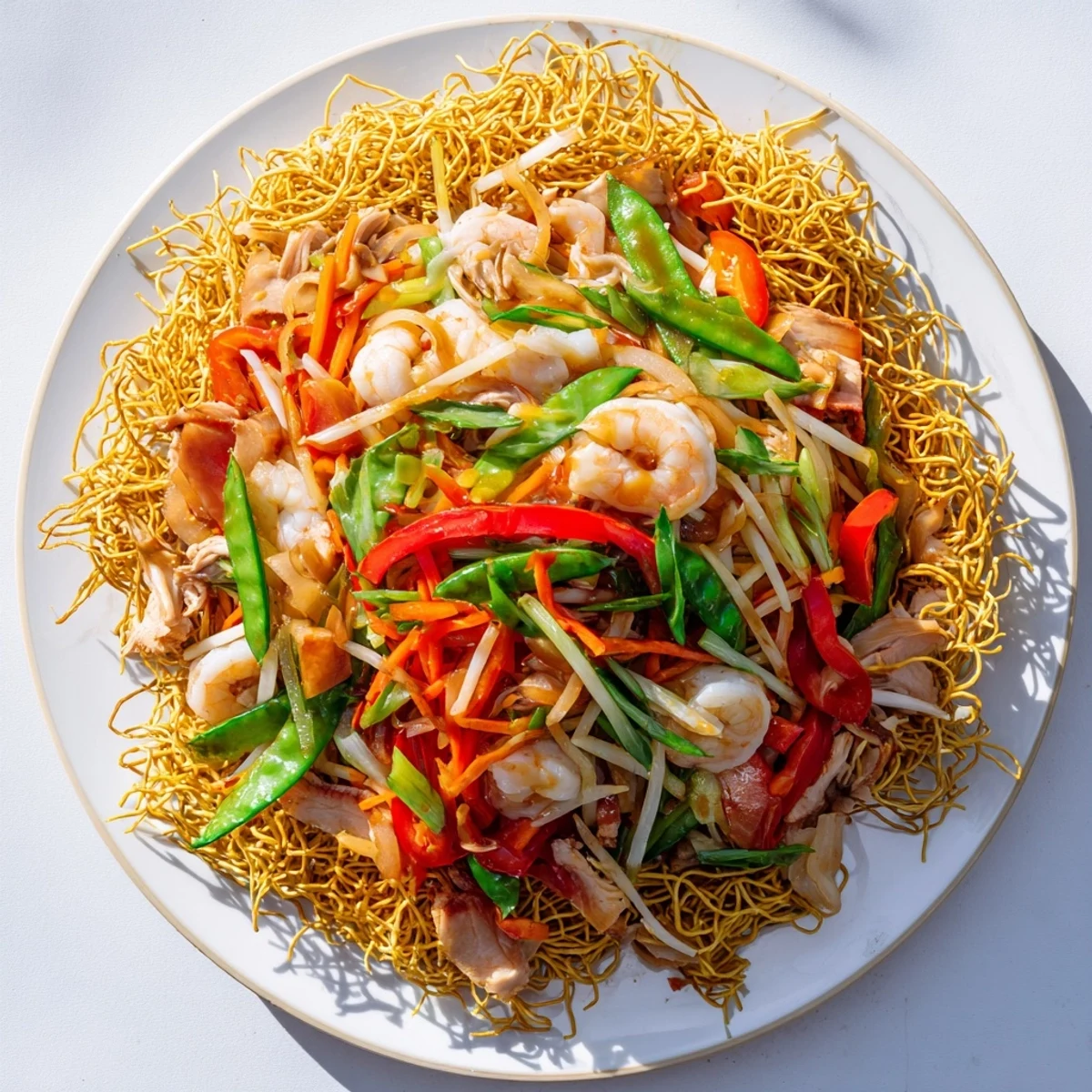
Save There is nothing quite like the sound of that first crispy bite followed by the rich, savory flavors of the topping. This is the dish that turned me from someone who was intimidated by Asian cooking into someone who now confidently experiments in the kitchen.
Recipe FAQs
- → What makes Cantonese chow mein different from other styles?
-
Cantonese chow mein features pan-fried noodles cooked until crispy on the bottom, creating a distinct texture contrast with the tender stir-fried topping. Unlike lo mein where noodles remain soft, the crispy base is the signature of this style.
- → Can I use dried noodles instead of fresh?
-
Yes, dried thin Chinese egg noodles or wheat noodles work well. Cook them according to package directions until al dente, drain thoroughly, and pat dry before pan-frying to ensure they crisp up properly.
- → What protein alternatives work in this dish?
-
Beyond chicken, shrimp and char siu, you can use beef, pork loin, or tofu. For vegetarian versions, firm tofu, extra vegetables like mushrooms and bok choy, and cashews make excellent protein substitutes.
- → How do I keep noodles crispy until serving?
-
Cook the noodle base just before serving and keep it warm in a low oven. Pour the topping and sauce over immediately at the table to maintain the crispy texture. Don't let the sauce sit on the noodles too long before eating.
- → Can I make this gluten-free?
-
Use rice noodles or gluten-free wheat noodles as a base. Substitute tamari for soy sauce and use a gluten-free oyster sauce alternative. Ensure all other ingredients, including the marinade components, are certified gluten-free.