
 Save
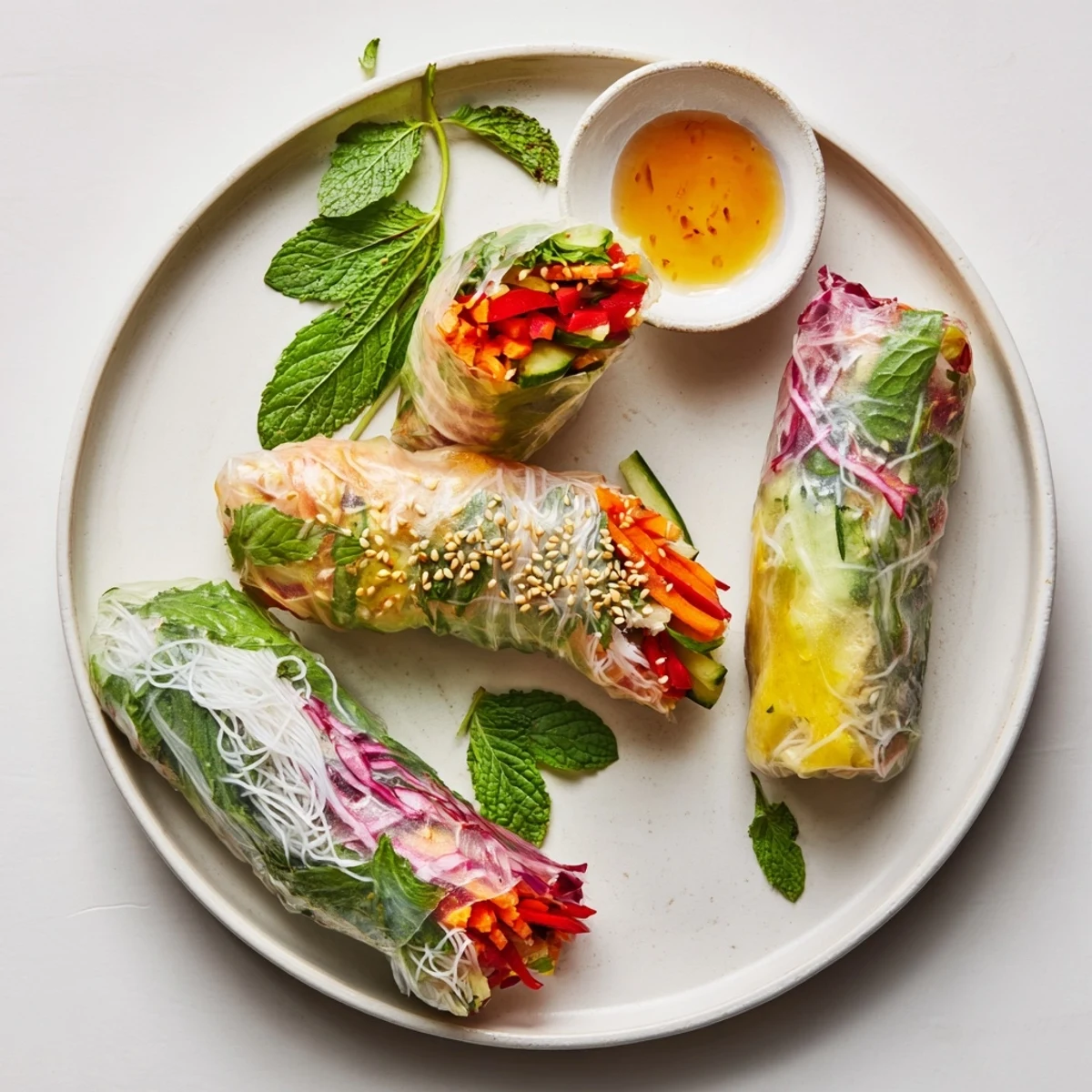
Save These gluten-free vegetable spring rolls come together in about 25 minutes. Julienne carrots, cucumber and bell pepper, shred cabbage and gather mint, cilantro and basil. Briefly soften rice paper in warm water, layer noodles and vegetables, then fold and roll tightly. Mix tamari, lime, rice vinegar, maple syrup, sesame oil, ginger and garlic for a bright dipping sauce. Serve immediately for best texture; garnish with sesame seeds.
The summer my neighbor Linda brought over a plate of fresh spring rolls during a backyard gathering changed how I thought about no cook meals entirely. Something about the way the translucent rice paper caught the afternoon light made them look almost too pretty to eat. I went home that same evening and emptied my crisper drawer into a pile of julienned vegetables determined to recreate them. Three batches later I finally understood that the secret was all in the wetting technique and not overstuffing the wrapper.
My daughter started requesting these for school lunches last year and I learned to wrap each one individually in damp paper towels so the rice paper stays pliable until noon.
Ingredients
- Carrot julienned: One medium carrot adds crunch and a gentle sweetness that balances the sharper herbs beautifully.
- Cucumber julienned: Half a cucumber brings cooling freshness so pick one that feels firm with minimal seeds.
- Red bell pepper thinly sliced: The sweetness and vivid color make every roll look restaurant worthy.
- Red cabbage shredded: This gives a satisfying snap and a deep purple hue that looks stunning through the rice paper.
- Fresh mint leaves: Do not skip this herb because it is the flavor that makes people close their eyes and say wow.
- Fresh cilantro leaves: Half a cup is enough to add brightness without overpowering anyone sensitive to it.
- Fresh basil leaves: Thai basil is ideal if you can find it but regular sweet basil works too.
- Gluten free rice paper wrappers: Check the packaging carefully because not all brands are certified gluten free.
- Cooked vermicelli rice noodles optional: These add satisfying bulk and a chewy texture that makes the rolls more filling.
- Sesame seeds optional: A sprinkle on top adds a subtle nutty finish and a professional look.
- Gluten free soy sauce or tamari: Tamari is your safest bet for a rich umami base that stays gluten free.
- Rice vinegar: Just one tablespoon brightens the whole dipping sauce.
- Lime juice: Fresh squeezed only because the bottled stuff tastes flat and metallic here.
- Maple syrup or honey: A touch of sweetness rounds out the acidity and salt in perfect harmony.
- Toasted sesame oil: One teaspoon is all you need for that warm nutty aroma.
- Grated ginger: Fresh ginger grated on a microplane melts right into the sauce and adds a gentle heat.
- Garlic finely minced: One clove is plenty since raw garlic can quickly take over.
- Water: A tablespoon thins the sauce just enough for dipping without it sliding right off.
Instructions
- Prep your vegetables and noodles:
- Juliene the carrot cucumber and pepper and shred the cabbage then cook the vermicelli according to the package if using and let everything cool completely before assembling.
- Soften the rice paper:
- Fill a shallow dish with warm water and dip one wrapper for about ten to fifteen seconds until it feels pliable but not gummy then lay it flat on a damp towel.
- Build your filling:
- Place a small handful of noodles and a colorful arrangement of vegetables and herbs across the center leaving about an inch of space on each side for folding.
- Roll it up tight:
- Fold the bottom edge over the filling tuck in both sides like an envelope then roll firmly toward the top keeping gentle even pressure so the wrapper seals neatly.
- Repeat and arrange:
- Continue with the remaining wrappers and filling and place each finished roll seam side down on a plate covered with a damp cloth so they do not stick together.
- Whisk the dipping sauce:
- Stir together the tamari rice vinegar lime juice maple syrup sesame oil ginger garlic and water in a small bowl until smooth and well blended.
- Serve and enjoy:
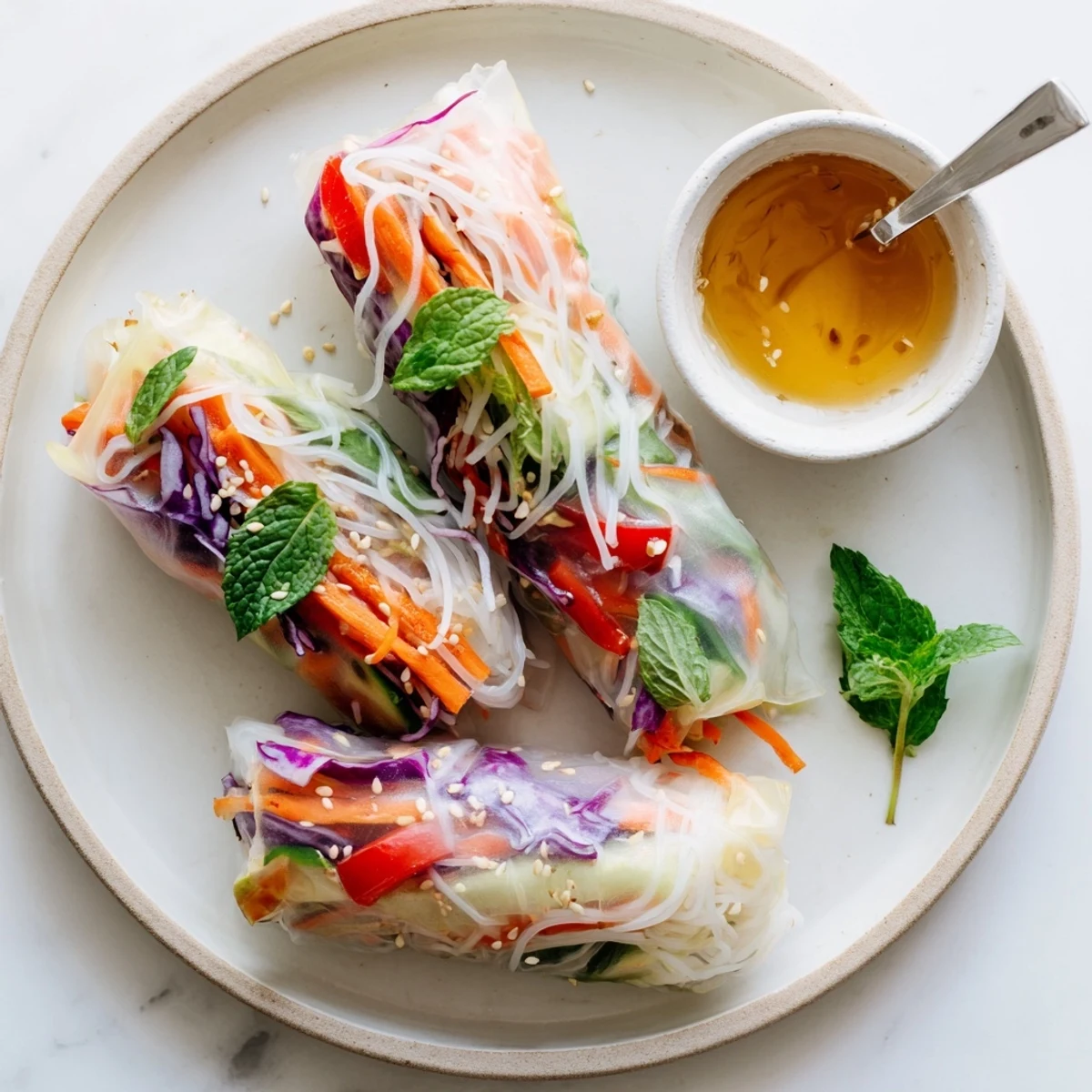
- Arrange the rolls on a platter sprinkle with sesame seeds if desired and serve immediately with the dipping sauce alongside.
 Save
Save The first time I served these at a potluck a friend stood in the kitchen eating four of them before making it to the backyard and that felt like the highest compliment possible.
Making Them Your Own
The beauty of spring rolls is how forgiving they are once you master the rolling technique so feel free to follow your cravings and swap ingredients freely.
Getting The Roll Right
A slightly damp surface underneath your wrapper is everything and I keep a clean wet dish towel spread flat on the counter as my workstation every single time.
Keeping Them Fresh
If you need to make them a little ahead lay a damp paper towel directly over the finished rolls and wrap the whole plate tightly with plastic wrap.
- Wet your hands before handling the rice paper to prevent tearing.
- Cover each finished roll immediately so it does not dry out while you work.
- Serve within an hour for the best texture and flavor.
 Save
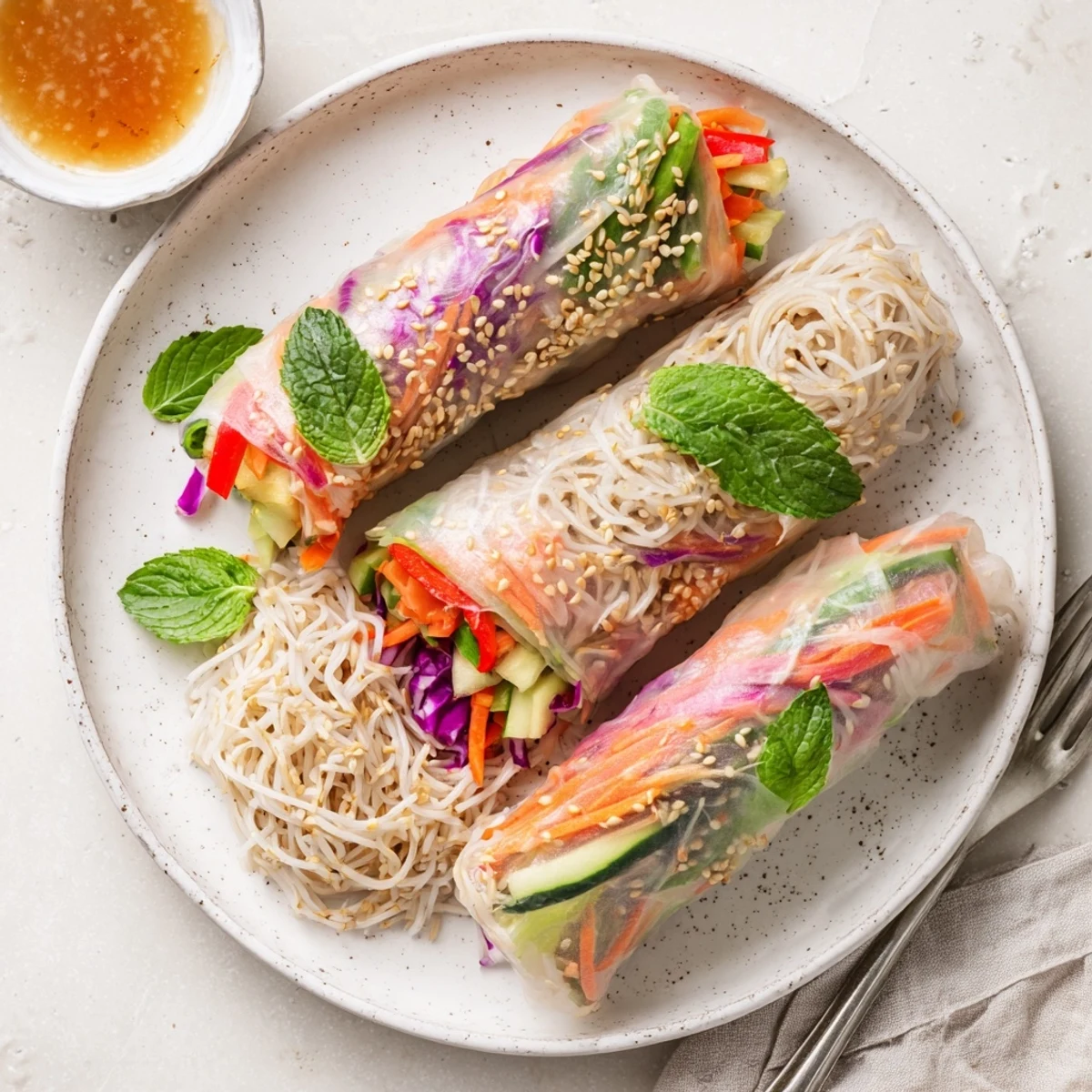
Save These rolls are proof that the simplest food prepared with fresh ingredients and a little patience can steal the spotlight at any table.
Recipe FAQs
- → How long should I soak the rice paper?
-
Submerge each sheet for about 10–15 seconds in warm water until just pliable. Over-soaking makes it fragile and harder to roll.
- → How do I prevent the wrappers from sticking?
-
Work on a damp towel and stack finished rolls separated by a slightly damp cloth. Keep unused sheets covered so they don’t dry out.
- → Can I substitute vegetables?
-
Yes—use thin slices of avocado, lettuce, bean sprouts, or julienned daikon. Choose crisp, dry vegetables cut thin for easy rolling.
- → What proteins pair well with these rolls?
-
Add strips of pan-fried tofu, grilled shrimp or thin chicken. Pat proteins dry and cool before filling to avoid soggy wrappers.
- → How should I store assembled rolls?
-
Assemble just before serving for best texture. If needed, store loosely covered in a single layer for up to 2 hours; refrigeration can dry the rice paper.
- → Can I change the dipping sauce?
-
Yes—swap tamari for coconut aminos or use a peanut-chili sauce for richness. Adjust lime and sweetener to balance acidity and sweetness.